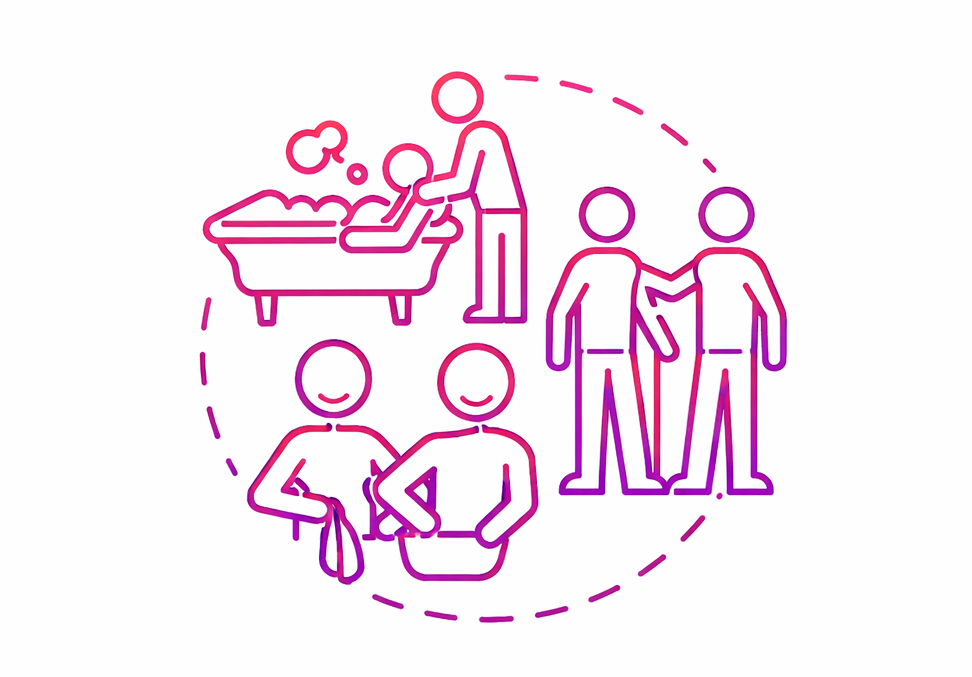
From 1 October 2026, personal care services under Support at Home are moving to the clinical supports contribution category. In practical terms, older Australians will no longer pay contributions for services like showering, dressing and continence management.
It’s a welcome simplification for participants and their families. For providers, though, it’s a change that needs to be handled carefully behind the scenes, well before the date arrives.
What’s actually changing
Under the current Support at Home arrangements, personal care sits in a contribution category that requires participants to pay towards the cost of these services. From 1 October, that changes. Personal care moves into the clinical supports category, which the Government fully funds. Participants will no longer be asked to contribute towards services like:
- Showering and personal hygiene
- Dressing
- Continence management
The Department of Health, Disability and Ageing has released an explainer video as part of a broader series designed to help the sector understand upcoming Support at Home changes. It’s aimed not just at providers, but at workers, older people, and their families and carers, which makes sense given how directly this affects what participants see on their statements each month.
The Department is also running a provider readiness survey, seeking feedback on where organisations might need more support ahead of the change. That’s worth paying attention to. It suggests the Department is aware this isn’t a trivial switch to flip, and that some providers will need lead time to get their systems and processes in order.
Why this matters more than it might first appear
On the surface, this reads as good news with minimal complexity: certain services simply stop attracting a contribution. But for the organisations delivering and billing for these services, the change touches several parts of the operation at once.
Billing and subsidy calculations. Systems need to correctly identify which services fall into the new clinical supports category and stop applying contribution charges to them from 1 October, not before, and not with a lag. Getting the timing wrong in either direction creates real problems: charging participants for services that should now be fully funded is the kind of error that erodes trust and invites complaints, while under-billing or misclassifying services elsewhere can create funding discrepancies that are tedious to unwind later.
Participant communication. Participants and their families need to understand what’s changed and why, ideally before they notice a different figure on their statement and start asking questions. Providers who get ahead of this with clear, proactive communication will have a much smoother transition than those who wait for participants to raise it themselves.
Downstream reporting. Contribution changes like this tend to ripple into monthly statements, budget tracking, and other participant-facing reporting. Any system that touches Support at Home billing needs to reflect the new category consistently across all of these outputs, not just in the primary claims process.
The risk of leaving it late
Six weeks might sound like enough runway, but for organisations relying on manual processes, spreadsheets, or software that requires vendor-side configuration changes, it can disappear quickly. The safest approach is to treat this the same way you’d treat any funding or classification change: identify affected services now, confirm how your system will apply the new category, test it against a sample of participant accounts, and plan your communications well ahead of 1 October.
It’s also worth considering whether this is an isolated update or one of several changes landing around the same time. Support at Home has seen a steady stream of adjustments this year, from new funding classifications to escalation pathways for assessment outcomes. Providers who treat each change as a one-off patch tend to accumulate technical debt in their billing systems. Providers who build in the flexibility to absorb regulatory change tend to find each subsequent update easier than the last.
Where to start
If you haven’t already, it’s worth completing the Department’s readiness survey. It’s a low-effort way to flag any gaps to the people setting the timeline, and it may surface support you weren’t otherwise aware was available.
Beyond that, the practical checklist is straightforward:
- Confirm which of your billed services fall under the new clinical supports category.
- Check how your billing system currently applies contributions to those services, and what needs to change.
- Test the update against real participant accounts before 1 October, not on the day itself.
- Prepare clear communication for participants and families explaining what’s changing and when.
If your billing setup needs a second set of eyes before October, the Care Systems team is happy to help you work through it.