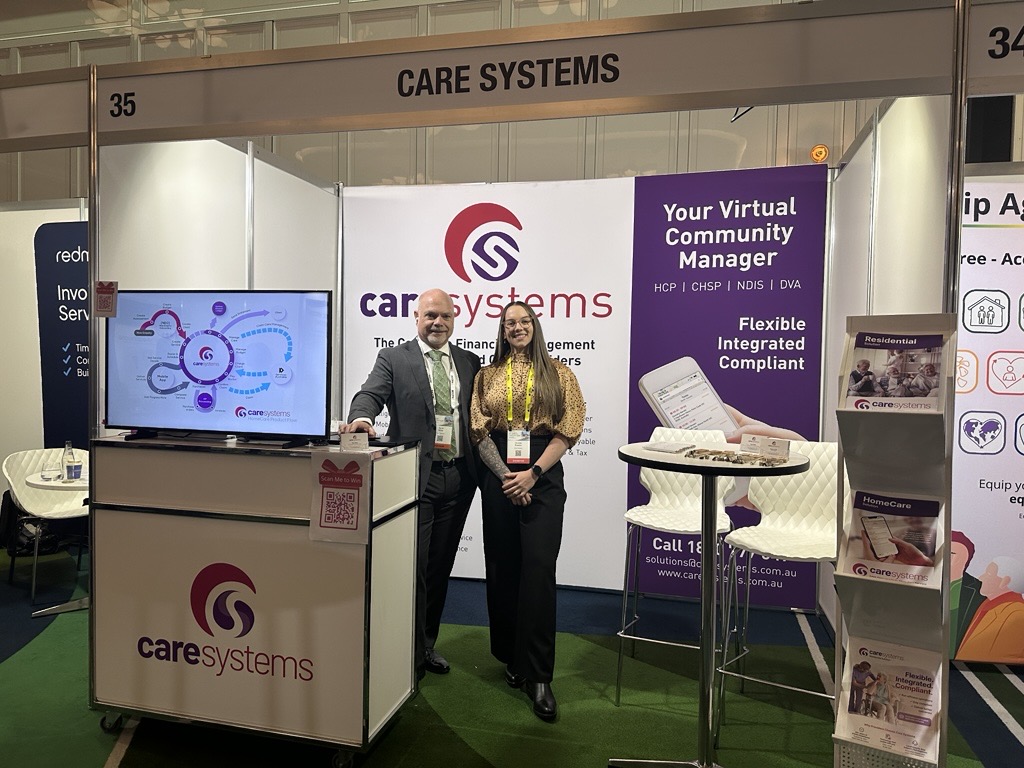
Crown Perth, 3–5 June 2026
The annual Ageing Australia WA State Conference brought together providers, executives, regulators, and sector thinkers for three days of honest conversation about where aged care in Australia is heading. Across the panels and fireside chats, several themes emerged that feel less like talking points and more like genuine turning points. Here are the most significant.
The New Aged Care Act: A Sector Finding Its Footing
The Aged Care Act 2024, which commenced on 1 November 2025, represents the most significant legislative overhaul of Australia’s aged care system since the 1997 Act. Born out of the damning findings of the Royal Commission into Aged Care Quality and Safety, the new Act places a Statement of Rights at its centre and imposes a general statutory duty on providers to ensure high-quality, safe care. It is a fundamental shift from a system historically focused on provider funding models.
A sector panel featuring leaders from Grant Thornton, Commonwealth Bank, Pearl Home Care, Bethanie, and Ageing Australia’s Tom Symondson explored how providers have responded in the months since the Act commenced. The picture is mixed but encouraging.
On the positive side, providers have invested significantly in aged care navigation support, care experiences, and palliative care. The Aged Care Quality and Safety Commission has become more engaged in problem-solving alongside providers, rather than simply reporting deficiencies, a shift that sector leaders welcomed. There is also greater engagement with care partners (family and supporters) in the delivery and monitoring of care standards, aligning with the Act’s intent to embed supported decision-making into everyday practice.
But challenges remain. The administrative burden, particularly the interface between My Aged Care and Services Australia, continues to absorb time and resources that would be better spent on care. The care minutes calculation rules need clearer guidance. And in WA, the tyranny of distance is acute: when travel costs are not funded, the reach of the system into regional communities is severely limited.
The panel also raised the question every leader in the room was quietly sitting with: what are the financially sustainable providers doing differently? The honest answer was uncomfortable but clarifying. They are focusing hard on cost, making targeted use of technology to automate compliance work, regularly reviewing RAD pricing, managing AN-ACC classifications carefully to ensure funding reflects acuity, and incentivising workers to stay. None of these are glamorous strategies, but together they are keeping organisations viable in a sector that, at $48 billion, must find a way to remain sustainable while care expectations rise.
The long-term question of how we fund aged care, particularly when housing affordability is already limiting access to accommodation, remains unresolved. As one panellist put it, we are building five-star accommodation that a large proportion of older Australians simply cannot afford.
The 10 Leadership Quotients Aged Care Needs Now
Emeritus Professor Gary Martin, CEO of AIM WA, delivered one of the most practical and useful sessions of the conference: a framework of ten leadership “quotients” that the sector urgently needs.
The list began in familiar territory: IQ (cognitive intelligence) and EQ (emotional intelligence). On EQ, Prof Martin offered a memorable provocation: those who lack emotional intelligence are often the last to recognise it. He urged leaders to understand what brings out the worst in them, and to become genuinely skilled at reading the emotional states of those around them. This is not a soft skill. Research consistently shows that emotionally intelligent leadership drives better care outcomes and staff retention in aged care settings (Randstad, 2023).
From there, the quotients expanded into territory that felt tailored to this moment in the sector’s history:
AQ (Adaptability Quotient): People are naturally change-averse. Leaders must be willing to evolve and resist becoming “architects of decay.”
SQ (Strategic Quotient): The ability to plan for and implement change at the right time, not just to vision it.
WQ (Wellbeing Quotient): Leaders cannot pour from an empty cup. Compassion fatigue is real in this sector, and self-care is not optional.
CQ (Cultural Quotient): We tend to hire in our own image. The better frame is “cultural add”: what does this person bring that the organisation does not already have?
GQ (Generational Quotient): Gen Z and Millennial workers are driven by purpose, autonomy, and growth (Deloitte, 2025). Leaders who fight generational difference rather than engage with it will lose their workforce.
DQ (Digital Intelligence): Technology is not the enemy of care. It is the means by which leaders can free their teams for care.
MQ (Moral Quotient): An inner compass that guides decisions when no policy or procedure quite fits the situation.
TQ (Trust Quotient): In a sector that lost significant public trust through the Royal Commission, rebuilding it, resident by resident, family by family, team member by team member, is the work of a generation.
Prof Martin closed with a warning: if you are ever drunk with power, you will lose all ten. He called it “hooper syndrome,” the corrupting effect of unchecked authority on the very qualities that make a leader worth following.
What the Netherlands and Norway Are Teaching Us About Risk, Freedom, and Strength
The standout session of the conference for many attendees was the fireside chat between David Sharpham (Bethanie) and Russell Bricknell (Juniper), who shared learnings from a study tour to the Netherlands and Norway.
What they described was less a set of programs and more a philosophical reorientation: away from risk containment and toward risk as a tool for building strength.
In the Netherlands, a movement pioneered by facilities like Humanitas and the dementia village model (De Hogeweyk) has reimagined what a residential aged care home can be. The philosophy is grounded in a simple but radical idea: autonomy gives the elderly a sense of power. Residents are entitled to make their own choices, including ones that nurses or doctors might not agree with. The goal is vitality: remaining alert and active, adapting expectations rather than surrendering them.
Norway has followed a similar path, with dementia villages now established in multiple municipalities. Research published in 2026 in BMC Health Services Research found that the transition from traditional nursing homes to dementia village models represented “a cultural and structural shift… emphasising autonomy, dignity, and normalised living environments.” Staff in those studies described the change as both challenging and deeply rewarding.
The practical implications, shared by Sharpham and Bricknell, were striking:
- Deliberately uneven paths to strengthen residents’ ankles and improve balance, rather than smooth paths designed to eliminate fall risk. The evidence base for strength-based physical environments is growing: a meta-analysis published in NCBI found a positive correlation (r = 0.33) between resident autonomy and wellbeing, and a negative one between external control and wellbeing.
- No-bed policies, where residents walk to meals rather than being wheeled, because walking preserves mobility. Outdoor activities are the norm, not the exception.
- Unlocking the doors, using wearable technology to manage access control rather than physical locks. Residents wear devices that allow them into their own rooms, enabling freedom of movement through the facility.
- Resident involvement in daily operations including cleaning, gardening, and preparing meals. The distinction between “residents” and “people who live here” is meaningful.
- A clear separation between private living space and activity space, so residents walk to activities, reinforcing both the physical benefit and the psychological distinction between rest and engagement.
- Early intervention when a diagnosis occurs, with the system in the Netherlands kicking in immediately to invest in preventing decline rather than managing it after it has progressed.
The parallel the panellists drew between Australia’s current regulatory culture and a “coercive care” model was pointed. The question for Australian providers is not whether these models are inspiring (they clearly are) but whether our regulatory and funding architecture allows us to move toward them. The cultural shift, as one panellist noted simply, is the hardest part. The biggest challenge is mindset.
What This Means for WA Providers
Western Australia’s aged care sector operates in a context that is genuinely different from the eastern seaboard. Distance is not a metaphor here. It is a daily operational reality. When travel is not funded, rural and regional older Australians are disadvantaged not just by geography but by the policy frameworks that govern the system.
Workforce is the other structural challenge. Ageing Australia’s national workforce strategy, developed through engagement forums with over 1,200 delegates in 2025, identified four consistent themes: attraction, retention, training, and sustainability. All four are live issues in WA. Research confirms that positive relationships and supportive leadership are among the most significant factors in retaining aged care workers, which connects directly back to Prof Martin’s 10 quotients.
What the conference made clear is that the sector is not waiting for permission to change. Providers are investing in their people, in technology, and in care models inspired by the best international evidence. The regulatory environment is catching up, and the new Act, for all its administrative demands, has shifted the sector’s moral centre of gravity in the right direction.
The challenge now is to move from aspiration to implementation: to design environments that build strength rather than contain risk, to lead with all ten quotients, and to ensure that older Australians in WA, wherever they live, have access to the dignified, autonomous, person-centred care they deserve.
Based on sessions from the 2026 Ageing Australia WA State Conference, Crown Perth, 3–5 June 2026, including the Sector Panel (How is the Sector Tracking Under the New Aged Care Act?), the Leadership session with Emeritus Professor Gary Martin (AIM WA), and the Fireside Chat (Experiences from the Netherlands and Norway) with David Sharpham (Bethanie) and Russell Bricknell (Juniper).