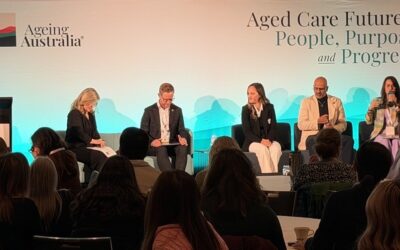
The conversations at the Ageing Australia TAS State Conference 2026 in Hobart were many and varied, but one theme kept surfacing with a particular urgency: the long-term sustainability of residential aged care, and whether Australia’s current funding settings are truly fit for purpose.
For providers in the room, this wasn’t an abstract policy discussion. It was personal. It was operational. And for many, it was existential.
The gap between demand and supply is widening
Australia’s population is ageing, and it is ageing fast. The number of older Australians requiring residential care is projected to grow significantly over the coming decades, yet the pipeline of new builds is not keeping pace. The reasons are well understood within the sector: construction costs have surged, financing is increasingly difficult to secure, and the regulatory environment adds layers of complexity that make development a daunting proposition even for experienced operators.
The result is a sector under pressure from both ends. Existing facilities are operating at or near capacity, while the infrastructure needed to meet future demand is simply not being built at the scale required.
This is not a problem that will solve itself. Without meaningful investment in new residential aged care infrastructure, the gap between what older Australians need and what the sector can provide will only grow.
Funding settings that don’t reflect reality
Beyond the capital challenge, there is a broader and equally urgent conversation to be had about ongoing operational funding. Running a residential aged care facility is complex, resource-intensive work. The care needs of residents have never been greater, staffing costs have risen substantially, and the expectations placed on providers, both regulatory and community, continue to increase.
Yet the funding many providers receive does not reflect this reality. For a significant number of residential aged care operators, particularly smaller and regional providers, margins are razor thin or simply not there at all. Operating at a loss is not a sustainable model, and it is a situation that threatens the viability of services that communities genuinely depend on.
The sector has made this case consistently and clearly. What is needed now is a funding response that matches the scale of the challenge.
Regional and rural providers carry a disproportionate burden
It is worth noting that the sustainability challenge is not evenly distributed. Regional and rural residential aged care providers face a compounding set of pressures: higher operational costs, greater workforce difficulty, smaller resident populations, and less access to the economies of scale available to larger metropolitan operators.
For these providers, the stakes are particularly high. When a regional facility closes or reduces its bed capacity, the impact on the local community is immediate and profound. Older Australians may face the prospect of moving far from family and familiar surroundings to access the care they need. This is not an acceptable outcome, and it underscores why a one-size-fits-all approach to residential aged care funding will never be sufficient.
What the sector is asking for
The conversation at the conference was not simply one of complaint. Providers and sector leaders came with clear positions and practical asks. At their core, these centre on three things.
First, a funding model that genuinely reflects the cost of delivering high-quality residential care, including appropriate recognition of the increased care complexity that providers are managing every day.
Second, targeted support for new builds and capital investment, whether through direct funding mechanisms, improved financing conditions, or planning and regulatory reform that makes development more viable.
And third, specific recognition of the additional costs and challenges faced by regional and rural providers, with funding settings that account for these realities rather than treating all providers as equivalent.
None of these asks are unreasonable. All of them are necessary.
The cost of inaction
It is easy to frame aged care funding as a cost. It is more accurate, and more honest, to frame it as an investment. An investment in the dignity and wellbeing of older Australians. An investment in the workforce that cares for them. And an investment in a system that, if properly supported, can deliver genuinely exceptional care at scale.
The cost of inaction, on the other hand, is already being felt. In providers operating without a viable margin. In new builds that don’t proceed. In communities that may lose access to local residential care entirely.
The Hobart conversations were a timely reminder that the sector’s sustainability is not a background issue. It is the issue. And it deserves a policy response that reflects that urgency.
Contact the Care Systems team today!
Care Systems is proud to support the aged care sector through reform and beyond. We work alongside providers to deliver practical, stable systems that help teams focus on what matters most: caring for older Australians.