Aged Care at a Turning Point: Collaboration, Sustainability and System Reform
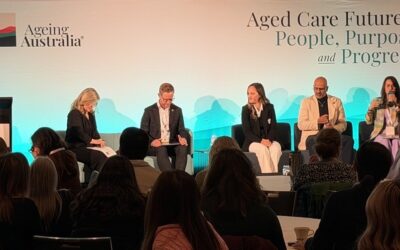
Ageing Australia’s SA State Conference last week kicked off the 2026 Conference Season and raised some serious discussions across government, regulation, service delivery and innovation which all point to a clear message: aged care is entering a pivotal phase of reform. The challenges facing the sector are well known, but what feels different now is the growing acknowledgement that lasting change will require shared responsibility, deeper collaboration, and a more realistic understanding of the operating environment.
A Shift in Government–Provider Relationships
One of the most notable developments is a more open acknowledgement from government that the reform journey has not been easy for providers. There is increasing recognition that implementation challenges were significant, and that guidance was not always timely or clear.
Encouragingly, this has been accompanied by a visible shift in tone and approach. Policymakers are speaking more openly about the need to listen to providers, to engage locally, and to design reform with a better understanding of how policy translates into day‑to‑day practice. While reform remains ongoing and firmly anchored in rights‑based care, the emphasis is moving from top‑down direction to partnership.
This shift matters. Trust and collaboration between government and providers are foundational if reform is to be translated into meaningful outcomes for older people rather than additional administrative burden.
Regulation: Beyond Compliance to Continuous Improvement
The Aged Care Quality and Safety Commission’s evolving approach reinforces this theme. The new legislative framework is unapologetically rights‑based and risk‑led, with clear priorities around protecting older people, transparency, and continuous improvement.
Importantly, compliance is no longer viewed as the end point. Providers are expected to demonstrate learning, improvement, and proactive risk management. The regulatory approach increasingly starts with education and support, escalating to enforcement only when necessary.
For providers, this represents both a challenge and an opportunity. Meeting minimum standards is no longer sufficient; improvement must be visible and embedded. At the same time, there is greater recognition that capability building and shared problem‑solving are essential to lifting quality across the sector as a whole.
Hospital Flow and Long‑Stay Patients: A System Problem
The issue of older people remaining in hospital longer than necessary continues to highlight structural gaps between health and aged care systems. Poor discharge communication, lack of trust between sectors, and capacity constraints in community and residential care all contribute to delayed transitions.
What is increasingly clear is that this is not a single‑provider failure—it is a system problem. Consumers consistently express a preference to be at home rather than in hospital, yet the pathways to support this outcome remain fragmented.
Discussions have highlighted the critical role of advanced care planning, transitional care models, and clearer communication channels between hospitals, primary care, and aged care providers. Addressing hospital flow will require coordinated solutions that span sectors, funding models, and service design.
Innovation That Delivers Real Value
Innovation remains a key lever for improvement, but there is growing consensus that innovation for its own sake is not enough. Effective innovation is grounded in trust, safe experimentation, and frontline input. It focuses on testing ideas quickly, learning fast, and scaling what works.
Practical examples reinforce this point. Programs such as pet therapy have demonstrated tangible improvements in engagement and wellbeing for residents. The use of AI in care planning has significantly reduced administrative time, allowing staff to return hours back to direct care.
These examples underline an important shift in thinking: innovation should deliver measurable outcomes, improve experiences, and meaningfully free up time and resources for care—not simply add another layer of complexity.
Financial Sustainability as a Capacity Issue
Perhaps the most pressing concern across the sector is financial sustainability. A majority of providers continue to operate at a loss. While recent funding increases have been welcome, they have not kept pace with cost pressures or the level of investment required to meet reform expectations.
Key financial levers—particularly accommodation pricing and disciplined cost management—are increasingly central to survival. The risk is clear: without financial viability, providers cannot invest in new beds, workforce capability, or service improvements. Over time, this becomes a direct threat to system capacity and consumer access.
Financial sustainability is no longer a back‑office issue; it is a frontline risk with real implications for care availability and quality.
Cybersecurity: A Care and Operational Risk
Cybersecurity has emerged as another critical, and often underestimated, challenge. Aged care is now a targeted industry, with AI making cyberattacks easier, more personalised, and more effective. The majority of breaches involve some form of human interaction, placing staff—often under pressure—at the centre of organisational risk.
This reframes cybersecurity as more than an IT concern. It is a care and operational issue, tied to training, culture, and risk awareness. Protecting information systems is ultimately about protecting the people who rely on them.
Looking Ahead
Across all these themes, one message is consistent: the future of aged care depends on collaboration. Sustainable, high‑quality, rights‑based care cannot be delivered by providers, regulators, or policymakers working in isolation.
Progress will require trust, open dialogue, realistic expectations, and shared accountability. The challenges are significant—but so too is the opportunity to build a more responsive, humane, and sustainable aged care system for the future.
May 6-7th 2026 ITAC Conference
Attending the ITAC Conference at the Brisbane Royal International Convention Centre this week? Be sure to say ‘hello’ to the Care Systems team at Coffee Station 2 (Booths 27 & 28) and enjoy a coffee on us!
Register your interest and find out more at https://conference.ageingaustralia.asn.au/…/registration/