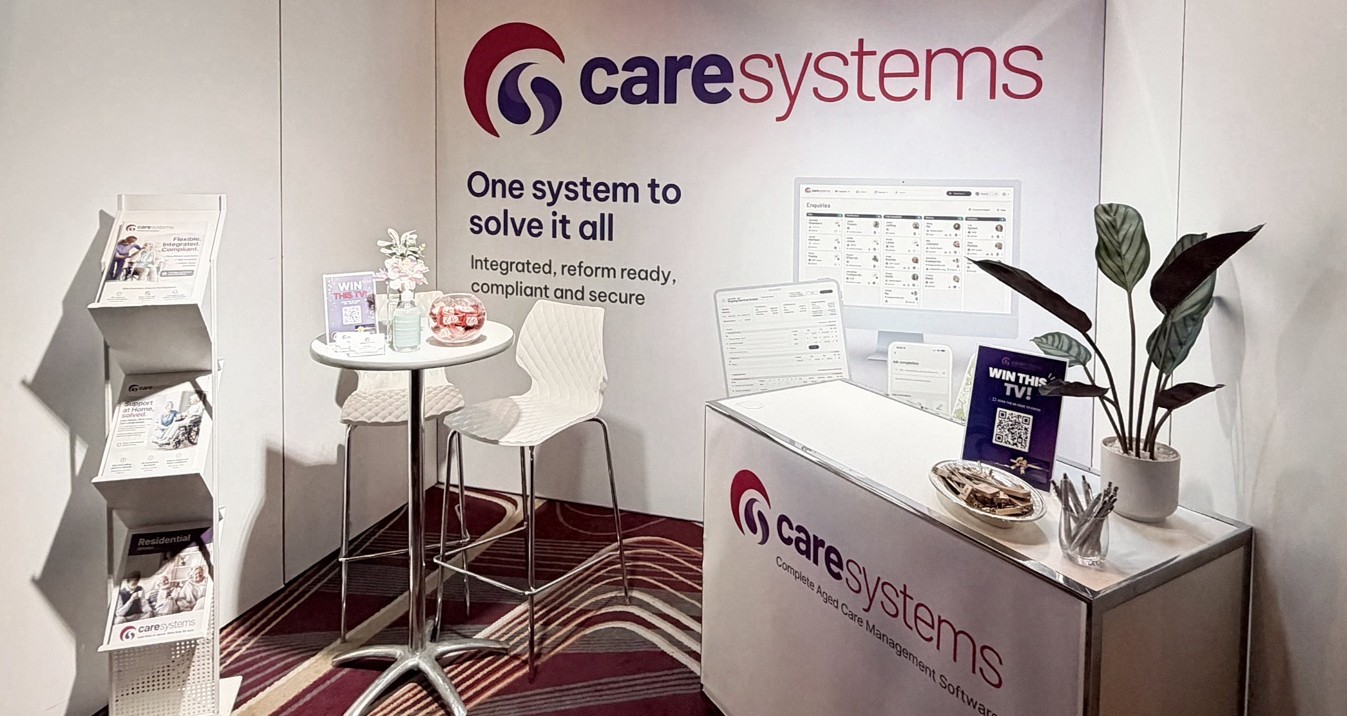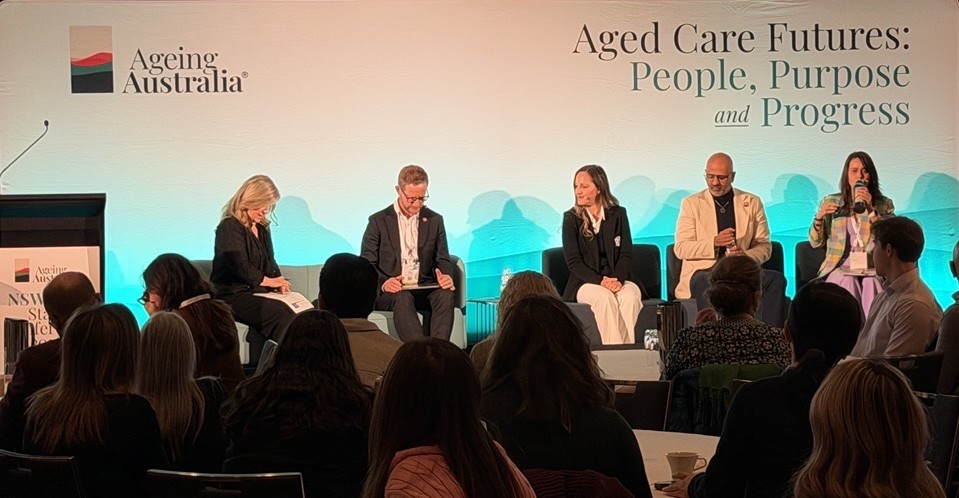
The Care Systems team attended the Ageing Australia NSW/ACT State Conference at the Hilton Sydney on 13 and 14 August. Across two days of sessions, a few clear themes emerged about where the aged care sector is heading, and what Care Providers should be paying attention to now. Here is what stood out…
The sector is planning for 2030, not just for today
The Aged Care 2030 panel set the tone for much of the conference, looking at what Care Providers need to prepare for as demographic change, workforce pressure, service delivery models and financial sustainability all shift at once. Futurist and demographer Ashley Fell built on this in her session on the macro trends reshaping the sector, including the generational shift in what Care Recipients and their families expect from care.
The message from both sessions was consistent: the changes ahead are structural, not incremental, and providers who start planning for them now will be in a stronger position than those who wait. A session on partnering for quality under the New Aged Care Act reinforced the same point from a compliance angle, framing reform readiness as an ongoing partnership between providers and regulators, not a box-ticking exercise.
Home care is being redesigned around real life
Two sessions stood out for providers delivering home care. Scalabrini Villages’ Live Easy session reframed home care around what actually matters to a Care Recipient, rather than what is funded or rostered. The shift in thinking, from “what’s funded?” to “what matters?”, is a useful lens for any provider reviewing how their home care services are structured.
Design before decline made a complementary case for proactive care, arguing that providers who show up sooner, before a Care Recipient’s needs escalate, deliver better outcomes and build more trust. It is a values-led argument, but a practical one too.
Residential providers are sharing hard-won operational lessons
On the residential side, the conference offered some genuinely practical content. A session on Higher Everyday Living Fees shared lessons from early adopters navigating the new fee structure, while Better buildings, no extra cost looked at how providers can improve their facilities without blowing out capital budgets. Both are worth revisiting for any residential provider working through their own implementation.
AI is moving from pilot to production
One of the most relevant sessions for the sector’s technology conversation was CGI’s case study on taking an AI project from pilot to production in a home care setting, in a matter of weeks rather than months. It is a useful counterpoint to the more cautious, exploratory tone that often surrounds AI in aged care, and a sign that early movers are starting to see real operational results.
A separate fireside chat on digital maturity in aged care rounded this out, prompting a useful question for any provider: where does your organisation actually sit on the digital maturity curve, and what would it take to move up it?
Workforce and culture deserve as much attention as compliance
Some of the most meaningful sessions were not about systems or funding at all. A panel on combatting racism in aged care tackled a topic the sector does not always give enough airtime, while a session on workforce wellbeing and workers compensation reform offered practical guidance for providers managing risk in an increasingly complex employment landscape. Both are reminders that the people delivering care, and the culture they work in, are just as central to the sector’s future as any policy or platform.
A candid look at what the sector is not saying publicly
Time Well Spent recorded a live episode of its podcast, You can’t say that, digging into what sector leaders are not saying in public forums. If it is published, it is worth a listen for anyone wanting a more candid read on where the sector’s leaders really stand.
Looking ahead
Beyond the sessions, our team also caught up with several Care Providers in person. Conversations like these are a reminder that behind every policy shift and technology trend, there are real providers and real Care Recipients navigating the change together.
We will be exploring several of these themes in more depth over the coming weeks, particularly the shift toward proactive, life-led home care and the move from AI pilots to real production use. If any of these topics are ones you would like to hear more about, let us know.